Basal Metabolic Rate (BMR) Calculator
Find out how many calories your body burns at complete rest. Your BMR is the foundation of any smart nutrition plan — enter your details below to get your number instantly.
What Is Basal Metabolic Rate (BMR)?
Your Basal Metabolic Rate is the number of calories your body needs to sustain its most essential functions — breathing, circulation, regulating body temperature, and keeping your organs running — while at complete rest. Think of it as the energy cost of simply being alive.
Our calculator supports three estimation formulas: the Mifflin-St Jeor equation (the most widely validated for general use), the Revised Harris-Benedict equation (a classic, time-tested formula), and the Katch-McArdle equation (the most precise option if you know your body fat percentage). Each takes into account your weight, height, age, and gender to give you a personalized calorie baseline.
Understanding your BMR is the first step toward smarter nutrition. Whether your goal is to lose weight, gain muscle, or simply maintain a healthy lifestyle, your BMR tells you the minimum your body needs — and everything else builds from there.
How to Use Your BMR to Reach Your Goals
Your BMR is a powerful starting point. Here's how to apply it depending on what you're working toward:
Lose Weight
To lose weight, you need to consume fewer calories than your body burns in a day (your TDEE). Your BMR sets the floor — eating significantly below it for extended periods can slow your metabolism and lead to muscle loss. A moderate deficit of 300–500 calories below your TDEE is a sustainable starting point.
Maintain Weight
To maintain your current weight, you need to match your calorie intake to your TDEE — which is your BMR multiplied by your activity level. Knowing your BMR helps you stay in balance without guesswork, especially on days when your activity varies.
Build Muscle
To build muscle, you need a calorie surplus — consuming slightly more than your TDEE. Your BMR helps you understand the baseline your body requires, so you can add just enough extra calories to support muscle growth without unnecessary fat gain. A surplus of 200–400 calories above TDEE is typically recommended.
Your Metabolism Is Your Starting Point
Your BMR gives you clarity, not constraints. Now that you know your baseline, you have the information you need to make smarter choices every day. Small, consistent actions — eating a little better, moving a little more — compound over time into real, lasting results. You're already on the right path.
More free nutrition calculators
Go further with your nutrition data. Each calculator builds on the last — use them together for a complete picture.
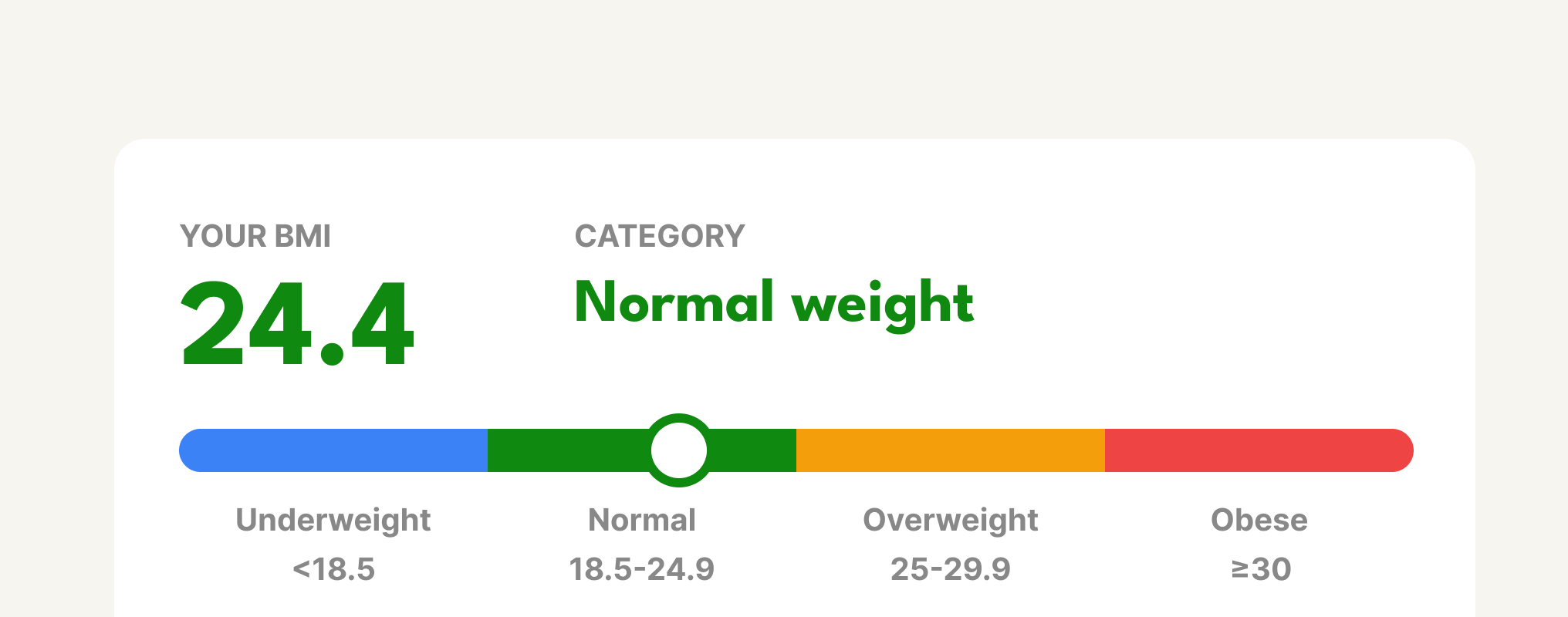
Body Mass Index (BMI) Calculator
Find out if your weight is in a healthy range for your height. A quick first step to understanding your body and setting realistic health goals.
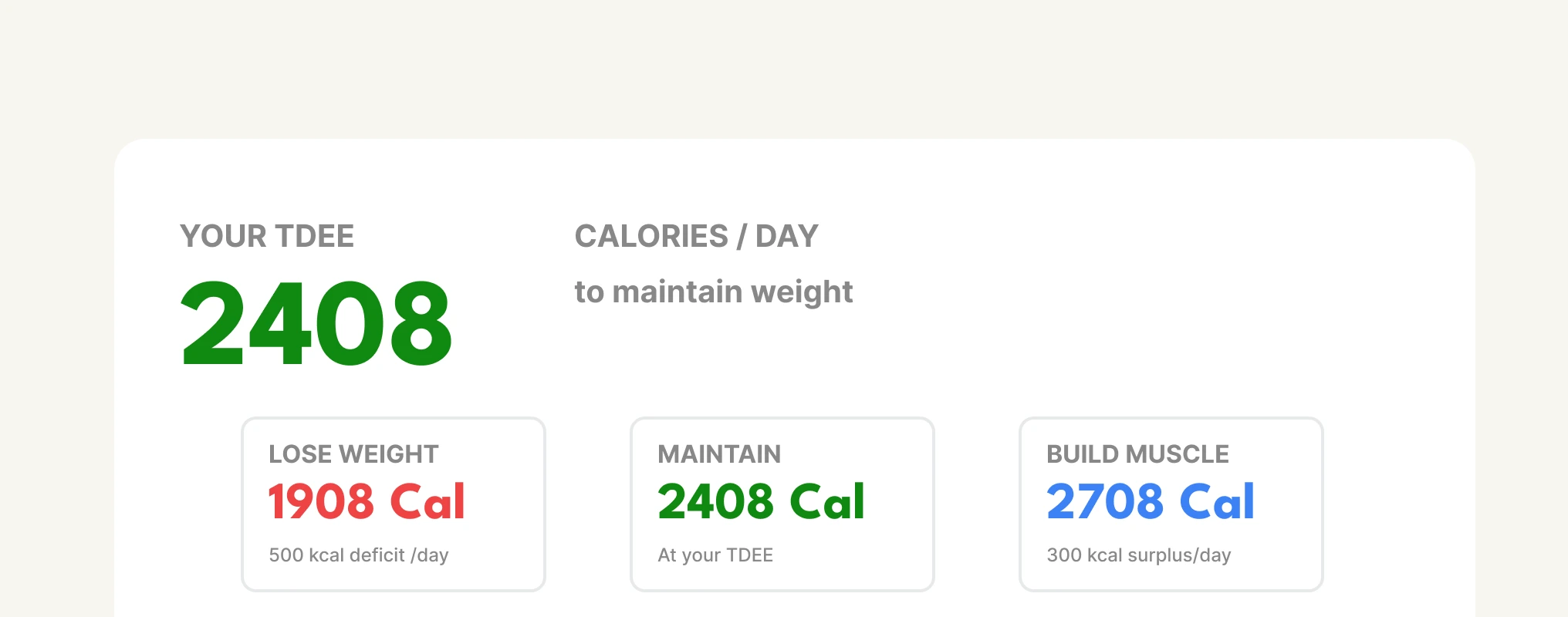
Total Daily Energy Expenditure (TDEE) Calculator
Get the exact number of calories your body needs based on your weight, height, age, and activity level.
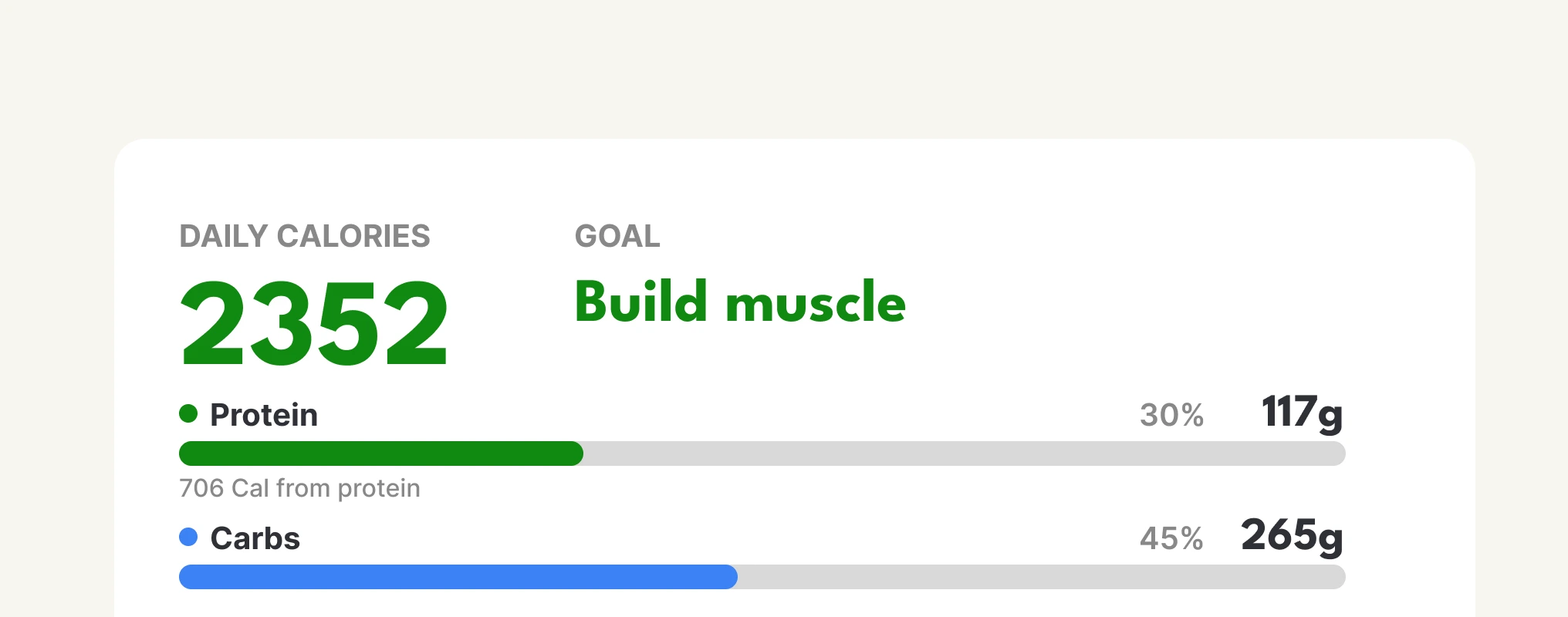
Macro Calculator
Find your ideal protein, carb, and fat targets based on your goals. Whether cutting, bulking, or maintaining — get a macro split tailored to you.
Explore whole foods
Browse Food Categories
Look up calories and macros for hundreds of whole foods — from chicken and beef to fruits, grains, and dairy.
Explore Food CategoriesBMR Calculator FAQ
What is BMR?
BMR stands for Basal Metabolic Rate. It's the number of calories your body needs to perform its most essential functions while at complete rest — things like breathing, circulating blood, regulating body temperature, and keeping your organs running. Think of it as the fuel cost of simply being alive. It doesn't include any calories burned through movement or exercise — just the bare minimum your body needs to function. Your BMR is the foundation of your daily calorie needs and a key starting point for any nutrition or fitness plan.
How is BMR calculated?
Our calculator supports three formulas. The Mifflin-St Jeor (default): for men, BMR = (10 × weight in kg) + (6.25 × height in cm) − (5 × age) + 5; for women, subtract 161 instead of adding 5. The Revised Harris-Benedict follows a similar structure with slightly different coefficients. The Katch-McArdle uses lean body mass instead, making it the most precise option if you know your body fat percentage.
What is a good BMR for my age?
BMR naturally decreases with age as muscle mass tends to decline. A typical BMR for an adult ranges from around 1,400 to 1,800 calories per day, though this varies significantly based on body size and composition. There is no single "good" BMR — what matters most is understanding your number and using it as a baseline for your nutrition goals.
Is a BMR of 1,700 good?
Yes, a BMR of 1,700 calories is a perfectly healthy and solid number! It falls comfortably within the normal range for many adults, particularly women who are taller or more muscular, and men of average build. It means your body burns 1,700 calories a day just at rest, before any activity is factored in. Once you account for your daily movement and exercise on top of that, your total calorie needs will be noticeably higher — which gives you a good amount of flexibility when it comes to eating well and fueling your body.
Is it better to have a high or low BMR?
Generally speaking, a higher BMR is considered advantageous. It means your body naturally burns more calories at rest, making it easier to maintain or lose weight without having to drastically restrict what you eat. A low BMR, on the other hand, means your body is more energy-efficient — which can make weight loss more challenging. The best way to naturally raise your BMR over time is to build lean muscle through strength training, eat enough protein, and stay consistently active. The good news is that your BMR isn't fixed — you have real power to influence it!
What is the difference between BMR and TDEE?
BMR is the number of calories your body burns at complete rest. TDEE (Total Daily Energy Expenditure) takes your BMR and multiplies it by an activity factor to estimate how many calories you actually burn throughout the day, accounting for exercise and daily movement. TDEE is what you should use when planning your daily calorie intake.
What is my BMR to lose weight?
Your BMR itself isn't a weight loss target — it's your baseline. To lose weight, you need to know your TDEE (Total Daily Energy Expenditure), which is your BMR multiplied by your activity level. From there, you create a moderate calorie deficit — typically 300 to 500 calories below your TDEE per day. One important rule of thumb: never eat below your BMR for extended periods. Doing so can slow your metabolism, reduce muscle mass, and leave you feeling exhausted. Sustainable weight loss happens just above your BMR, not below it.
How many calories should I eat if my BMR is 1,500?
If your BMR is 1,500, that's the minimum your body needs just to survive at rest — so you should never regularly eat below that number. To find your actual daily calorie target, multiply your BMR by your activity factor. For example, if you're lightly active, your TDEE might be around 1,500 × 1.375 = approximately 2,060 calories per day. To lose weight gradually and healthily, you might aim for around 1,600–1,700 calories per day — enough to create a deficit from your TDEE while still comfortably fueling your body.
Can exercise increase my BMR?
Yes, and this is one of the most motivating facts about fitness! Exercise — especially strength training — can meaningfully raise your BMR over time. Muscle tissue is metabolically active, meaning it burns calories even when you're doing nothing. The more lean muscle you build, the higher your resting calorie burn becomes. Cardio exercise also gives your metabolism a temporary boost after a workout (known as the "afterburn effect" or EPOC). So even if the number on the scale changes slowly, regular exercise is quietly upgrading your metabolism in the background — and that's a win worth celebrating.