Macro Calculator
Find your ideal daily protein, carb, and fat targets. Enter your details and select your goal to get a personalised macro split you can start using today.
What Are Macronutrients?
Macronutrients — or macros — are the three core nutrients that provide your body with energy: protein, carbohydrates, and fat. Every meal you eat contains some combination of all three, and each plays a distinct and essential role in how your body functions, recovers, and performs.
Protein is the building block of muscle tissue. It supports repair, preserves lean mass during a deficit, and keeps you feeling full longer. Carbohydrates are your body's preferred fuel source — especially for the brain and during exercise. Fat supports hormone production, protects organs, and enables the absorption of fat-soluble vitamins.
Knowing your macros turns nutrition from guesswork into a clear, actionable plan. Rather than just counting calories, tracking macros ensures those calories are actually coming from the right sources — the ones that support your specific goal.
How Your Goal Shapes Your Macros
The right macro split depends entirely on what you're working toward. Here's how each goal affects the balance:
Lose Weight — 35% protein · 35% carbs · 30% fat
When cutting, protein is your most important macro. A higher protein intake helps you preserve as much muscle as possible while in a calorie deficit — which keeps your metabolism higher and ensures the weight you lose is fat, not muscle. Carbs are kept moderate to fuel your daily activity, while fat supports hormone health and satiety.
Maintain Weight — 30% protein · 40% carbs · 30% fat
At maintenance, the goal is balance. A moderate protein intake keeps your body composition stable, while a slightly higher carb allocation gives you the energy to stay active and perform well. This is a flexible, sustainable split that works well for long-term healthy eating.
Build Muscle — 30% protein · 45% carbs · 25% fat
When building muscle, carbohydrates take on greater importance. They fuel resistance training, replenish glycogen stores after workouts, and support recovery. Protein remains high to provide the amino acids needed for muscle synthesis, while fat is kept slightly lower to make room for the extra carbs without pushing total calories too high.
Stop Guessing. Start Fuelling with Purpose.
Most people either eat too little protein, too many processed carbs, or not enough of the right fats — without ever realising it. Knowing your macros changes that. It gives you a clear framework to build meals around, making it far easier to hit your goals without obsessing over every bite. Start with your numbers, track for a few weeks, and adjust as you learn what works for your body.
More free nutrition calculators
Go further with your nutrition data. Each calculator builds on the last — use them together for a complete picture.
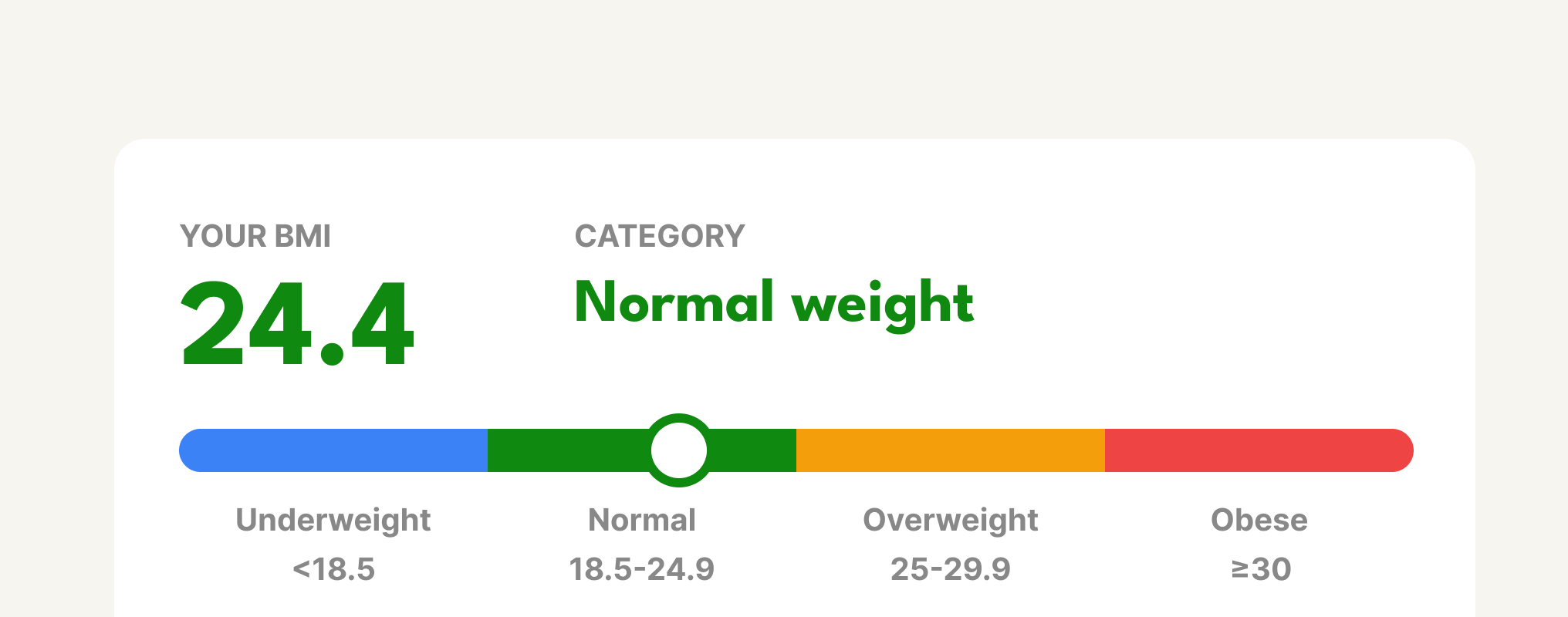
Body Mass Index (BMI) Calculator
Find out if your weight is in a healthy range for your height. A quick first step to understanding your body and setting realistic health goals.
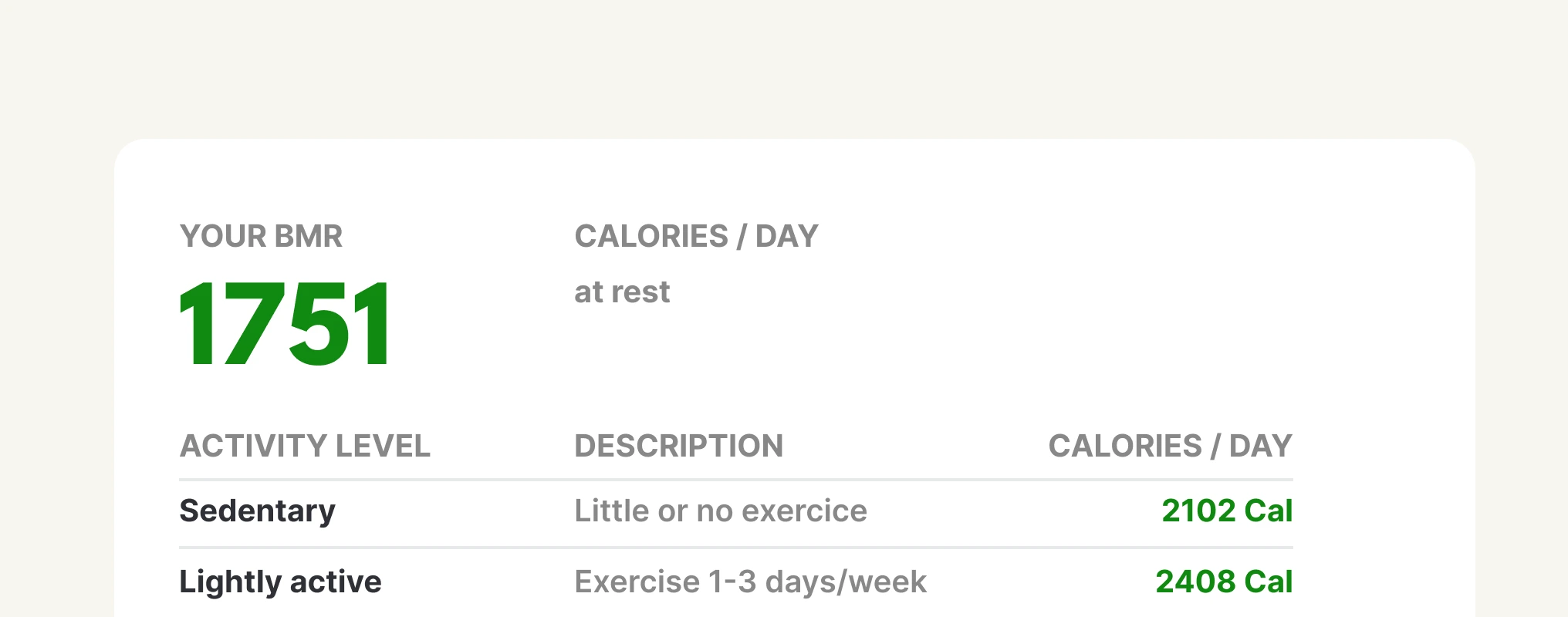
Basal Metabolic Rate (BMR) Calculator
Discover how many calories your body burns at complete rest. Your BMR is the foundation of any smart nutrition or weight management plan.
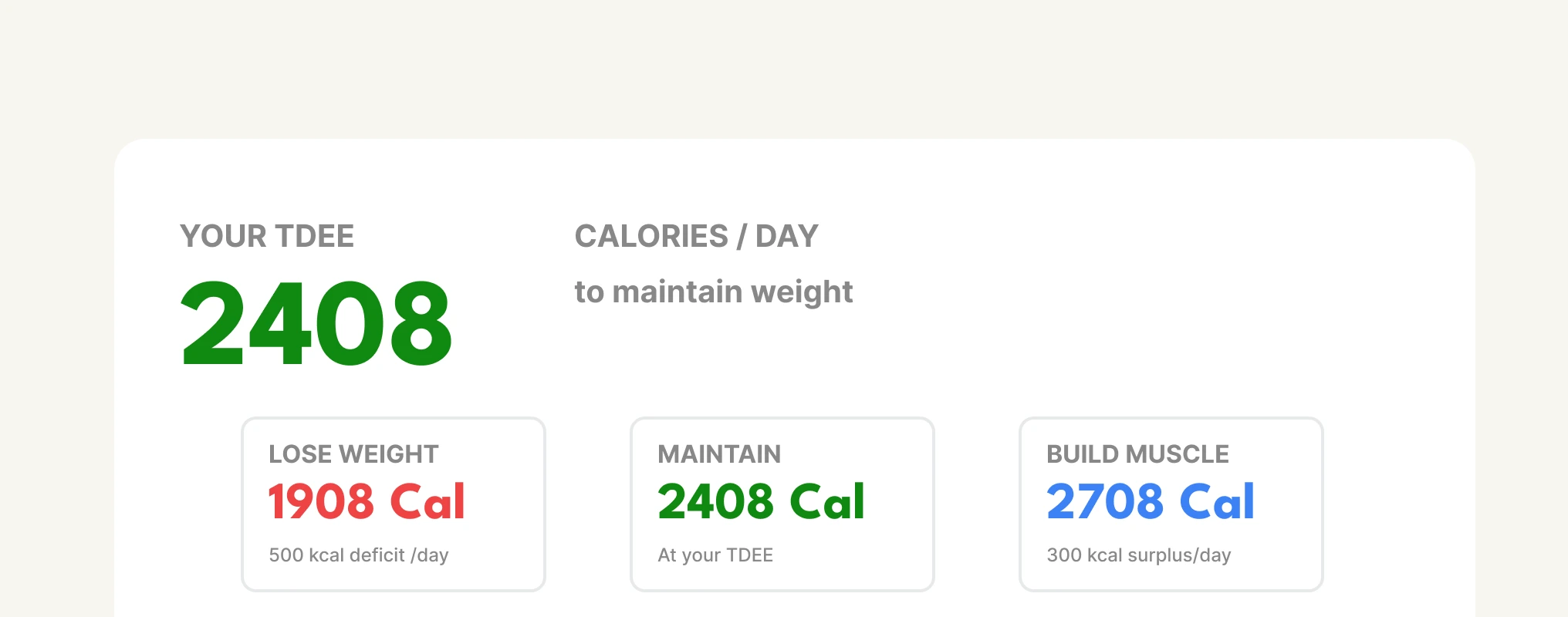
Total Daily Energy Expenditure (TDEE) Calculator
Get the exact number of calories your body needs based on your weight, height, age, and activity level.
Explore whole foods
Browse Food Categories
Look up calories and macros for hundreds of whole foods — from chicken and beef to fruits, grains, and dairy.
Explore Food CategoriesMacro Calculator FAQ
What are macros?
Macros — short for macronutrients — are the three main nutrients your body uses for energy: protein, carbohydrates, and fat. Every food you eat contains some combination of these three. Protein supports muscle repair and growth, carbohydrates provide fuel for your brain and muscles, and fat supports hormone production, vitamin absorption, and long-term energy. Tracking macros means paying attention to how many grams of each you consume each day, rather than just total calories — giving you much greater control over your body composition and performance.
How are macros calculated?
Macros are calculated by first working out your TDEE (Total Daily Energy Expenditure) — the total number of calories your body burns in a day. That total is then adjusted based on your goal (adding a surplus for muscle gain or subtracting a deficit for fat loss), and the resulting calorie target is split into protein, carbs, and fat according to your goal-specific ratio. Since protein and carbs each provide 4 calories per gram, and fat provides 9 calories per gram, the gram targets for each macro are derived from there.
How much protein do I need per day?
For most active adults, the recommended range is 1.6 to 2.2 grams of protein per kilogram of bodyweight per day. Higher intakes (towards 2.2g/kg) are particularly beneficial when cutting calories or doing significant strength training, as they help preserve muscle mass during a deficit. If you're sedentary or simply focused on general health, 1.2–1.6g/kg is a reasonable baseline. Our calculator sets your protein target based on your goal to make sure you're always in the right range.
What is a good macro split for weight loss?
For weight loss, a higher-protein split works best — typically around 35% protein, 35% carbs, and 30% fat. The elevated protein helps preserve muscle tissue while you're in a calorie deficit, which is critical for keeping your metabolism from slowing down too much. Carbs are kept moderate to fuel your daily activity, and fat is maintained at a level that supports satiety and hormonal health. Pair this split with a deficit of 300–500 calories below your TDEE for steady, sustainable fat loss.
What is a good macro split for building muscle?
For building muscle, carbohydrates become more important — a split of around 30% protein, 45% carbs, and 25% fat works well for most people in a muscle-building phase. Carbs fuel resistance training sessions, replenish muscle glycogen after workouts, and support recovery. Protein stays high to supply the amino acids needed for muscle synthesis. This split is paired with a modest calorie surplus of 200–400 calories above your TDEE for lean muscle gain with minimal fat accumulation.
Should I track macros or just calories?
Tracking macros gives you a much more complete picture than calories alone. Two diets can have identical calorie counts but very different effects on your body composition, energy levels, and performance depending on how those calories are split between protein, carbs, and fat. For example, a high-protein diet will preserve more muscle during a cut than a high-fat or high-carb diet at the same calorie level. That said, if tracking macros feels overwhelming at first, starting with total calories and a rough protein target is a great and perfectly valid first step.
Does the macro split change based on my goal?
Yes — and it changes significantly. Your goal fundamentally shapes how your daily calories should be distributed. Weight loss benefits from a higher protein percentage to protect muscle during a deficit. Muscle building leans into higher carbs to fuel training and recovery. Maintenance sits in a balanced middle ground. Our calculator automatically adjusts your macro percentages and gram targets based on the goal you select, so you always get a split that's aligned with what you're actually working toward.
How accurate is a macro calculator?
Macro calculators are a reliable evidence-based starting point for the vast majority of people, but they're estimates rather than perfect prescriptions. Individual responses vary based on factors like sleep quality, stress levels, workout intensity, and metabolic differences that no formula can fully account for. The best approach is to treat your macro targets as a starting point, track your food intake consistently for 2–4 weeks, and then adjust based on how your body responds — whether that's weight, energy, strength, or body composition.