Calories in Fruits
Apples, bananas, berries, tropical fruits, and more. Full calorie data for every fruit, straight from the USDA database. Look up calories per 100g or per serving, in metric or imperial.
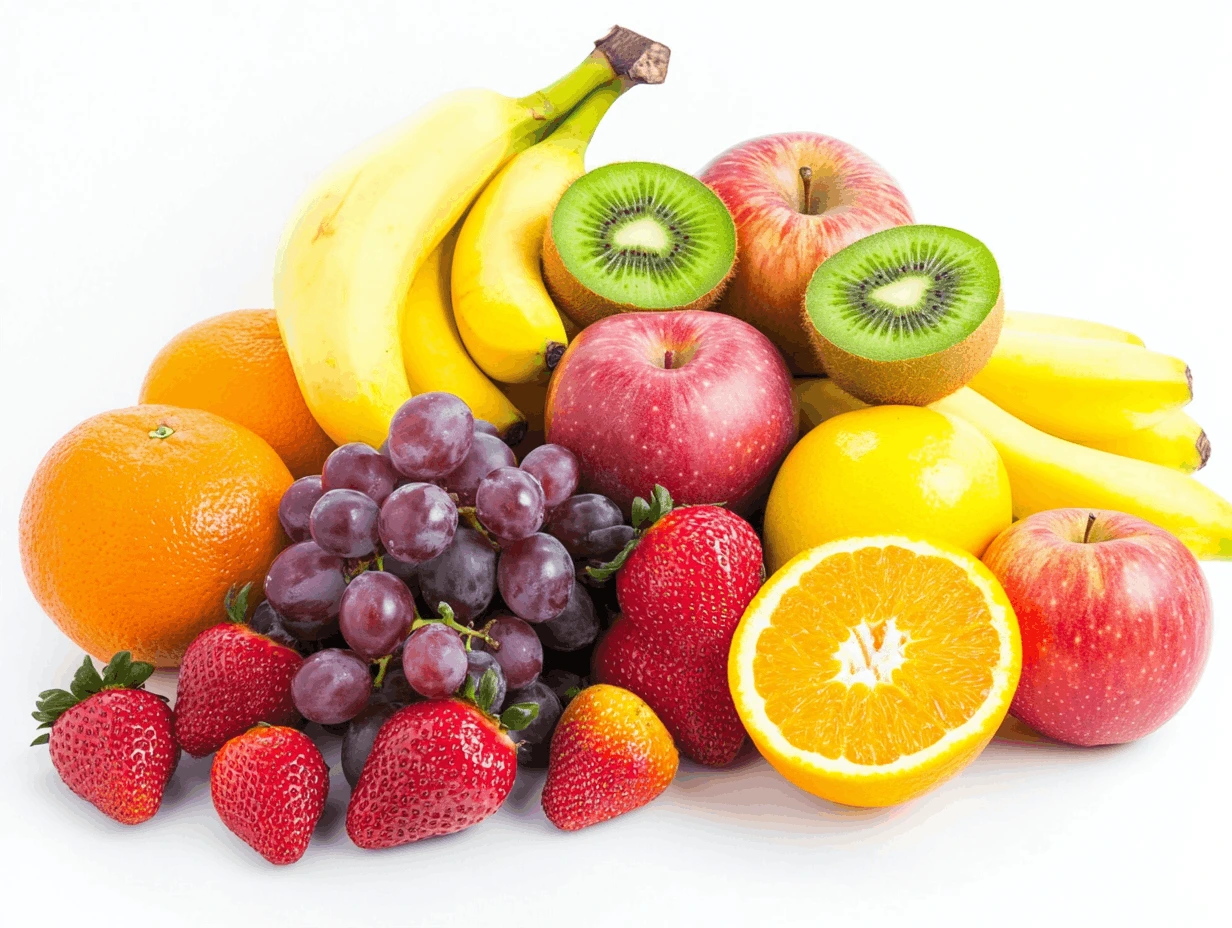
Apples, bananas, berries, tropical fruits, and more. Full calorie data for every fruit, straight from the USDA database. Look up calories per 100g or per serving, in metric or imperial.
| Food | Serving | Calories |
|---|---|---|
| Apple, Raw (With Skin) | 1 medium (182g) | 52 Cal |
| Banana, Raw | 1 medium (118g) | 89 Cal |
| Orange, Raw | 1 medium (131g) | 47 Cal |
| Strawberries, Raw | 1 cup whole (152g) | 32 Cal |
| Blueberries, Raw | 1 cup (148g) | 57 Cal |
| Raspberries, Raw | 1 cup (123g) | 52 Cal |
| Blackberries, Raw | 1 cup (144g) | 43 Cal |
| Grapes, Red or Green Raw | 1 cup (151g) | 69 Cal |
| Watermelon, Raw | 1 cup diced (152g) | 30 Cal |
| Mango, Raw | 1 cup sliced (165g) | 60 Cal |
| Pineapple, Raw | 1 cup chunks (165g) | 50 Cal |
| Peach, Raw | 1 medium (150g) | 39 Cal |
| Pear, Raw | 1 medium (178g) | 57 Cal |
| Plum, Raw | 1 medium (66g) | 46 Cal |
| Cherries, Sweet Raw | 1 cup (154g) | 63 Cal |
| Kiwifruit, Raw | 1 medium (76g) | 61 Cal |
| Avocado, Raw | half (100g) | 160 Cal |
| Lemon, Raw (Without Peel) | 1 medium (58g) | 29 Cal |
| Lime, Raw | 1 medium (67g) | 30 Cal |
| Grapefruit, Raw | half (123g) | 42 Cal |
| Pomegranate, Raw (Arils) | 1 cup (174g) | 83 Cal |
| Apricot, Raw | 1 apricot (35g) | 48 Cal |
| Nectarine, Raw | 1 medium (142g) | 44 Cal |
| Papaya, Raw | 1 cup cubed (145g) | 43 Cal |
| Cantaloupe (Rockmelon), Raw | 1 cup diced (160g) | 34 Cal |
| Honeydew Melon, Raw | 1 cup diced (170g) | 36 Cal |
| Fig, Raw | 1 medium (50g) | 74 Cal |
| Fig, Dried | 2 figs (38g) | 249 Cal |
| Dates, Medjool | 1 date (24g) | 277 Cal |
| Raisins | small box (43g) | 299 Cal |
| Prunes (Dried Plums) | 5 prunes (42g) | 240 Cal |
| Coconut, Raw Meat | 1 cup shredded (80g) | 354 Cal |
| Guava, Raw | 1 medium (55g) | 68 Cal |
| Lychee, Raw | 10 lychees (100g) | 66 Cal |
| Passion Fruit, Raw | 1 fruit (18g) | 97 Cal |
| Dragon Fruit (Pitaya), Raw | 1 cup (227g) | 60 Cal |
| Jackfruit, Raw | 1 cup (165g) | 95 Cal |
| Starfruit (Carambola), Raw | 1 medium (91g) | 31 Cal |
| Persimmon, Raw | 1 fruit (168g) | 70 Cal |
| Plantain, Raw | 1 medium (179g) | 122 Cal |
| Plantain, Cooked | 1 cup sliced (154g) | 116 Cal |
| Cranberries, Raw | 1 cup (100g) | 46 Cal |
| Elderberries, Raw | 1 cup (145g) | 73 Cal |
| Gooseberries, Raw | 1 cup (150g) | 44 Cal |
| Red Currants, Raw | 1 cup (112g) | 56 Cal |
| Tangerine (Mandarin), Raw | 1 medium (88g) | 53 Cal |
| Clementine, Raw | 1 fruit (74g) | 47 Cal |
| Mulberries, Raw | 1 cup (140g) | 43 Cal |
| Quince, Raw | 1 medium (92g) | 57 Cal |
| Tamarind, Raw | 1 cup pulp (120g) | 239 Cal |
| Kumquat, Raw | 5 kumquats (95g) | 71 Cal |
| Feijoa (Pineapple Guava), Raw | 1 medium (50g) | 55 Cal |
| Longan, Raw | 1 cup (177g) | 60 Cal |
Data source: USDA FoodData Central. Values are approximate and may vary by variety, ripeness, and preparation method.
Fruit is one of the most nutritionally complete food groups available. Most fresh fruits are low in calories, virtually fat-free, and packed with vitamins, minerals, fiber, and antioxidants. The natural sugars in fruit come packaged with fiber, which slows absorption and prevents the blood sugar spikes associated with processed sugary foods.
Berries in particular stand out for their exceptional antioxidant density relative to their calorie count. Raspberries, blackberries, and strawberries are among the lowest calorie fruits while offering high fiber and impressive vitamin C content. Tropical fruits like mango and pineapple tend to be higher in sugar but deliver vitamins A, C, and digestive enzymes. Dried fruits and dates are concentrated sources of energy and nutrients, but require more careful portioning.
Eating a wide variety of fruits across the color spectrum ensures you get a broad range of phytonutrients. The pigments that give blueberries their blue color, strawberries their red, and mangoes their orange each represent different classes of antioxidants with different health benefits. No single fruit does everything, but together they provide exceptional nutritional breadth.
Drying fruit removes most of its water, which dramatically concentrates its sugars and calories. A cup of fresh grapes contains around 104 calories, while the same weight of raisins contains 299 calories per 100g. This does not make dried fruit unhealthy, but it does mean portions need to be smaller. Dried fruits retain most of their fiber, potassium, and iron, and can be a convenient and calorie-efficient source of these nutrients in small amounts.
Canned fruit in syrup adds significant sugar and calories versus fresh or canned-in-juice varieties. When buying canned fruit, look for products packed in water or their own juice rather than syrup to keep calorie counts closer to fresh fruit values.
Browse calories and macros across all food groups in our USDA-backed nutrition database.
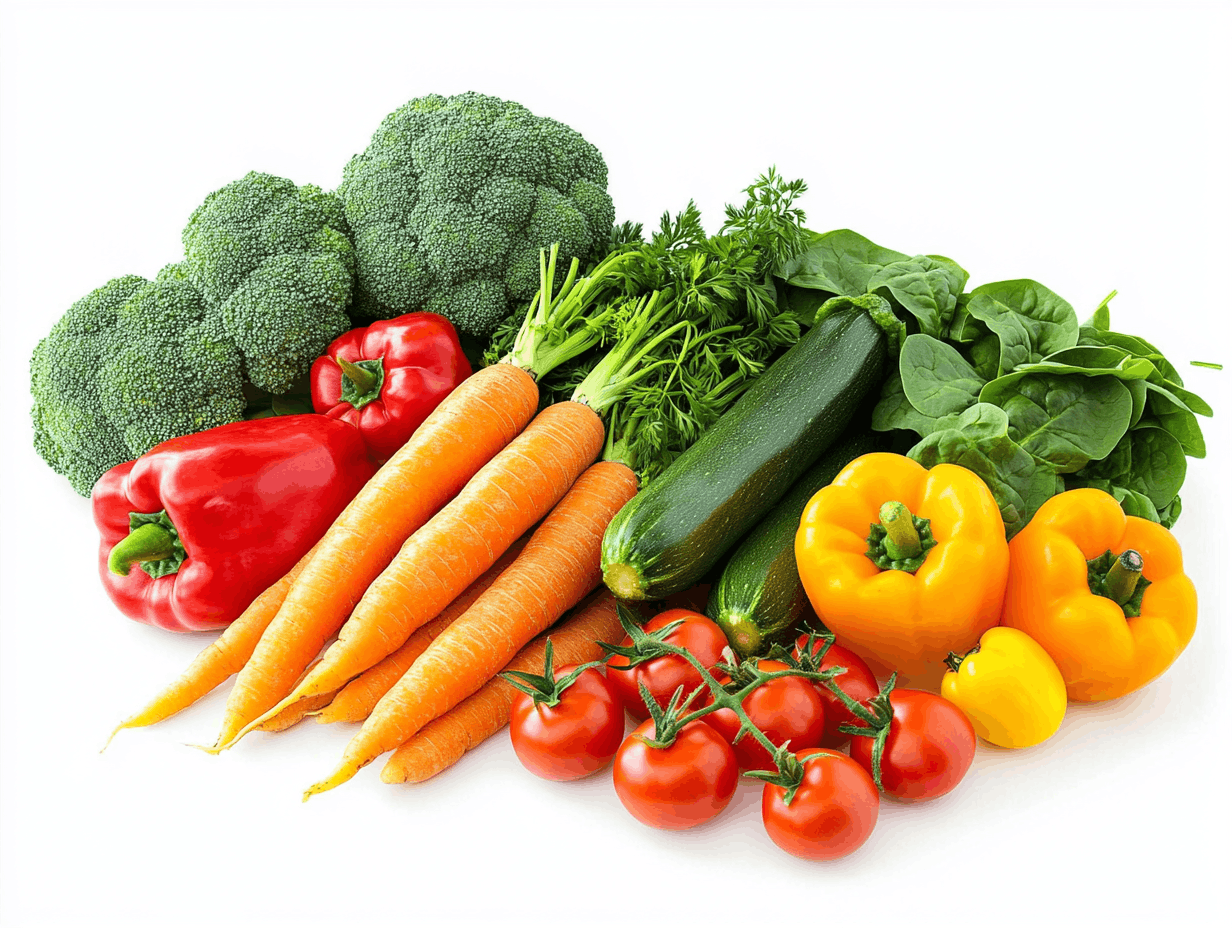
From leafy greens to root vegetables, explore calorie data for every vegetable. Compare raw and cooked values across broccoli, spinach, sweet potato, and more.
See calories for vegetables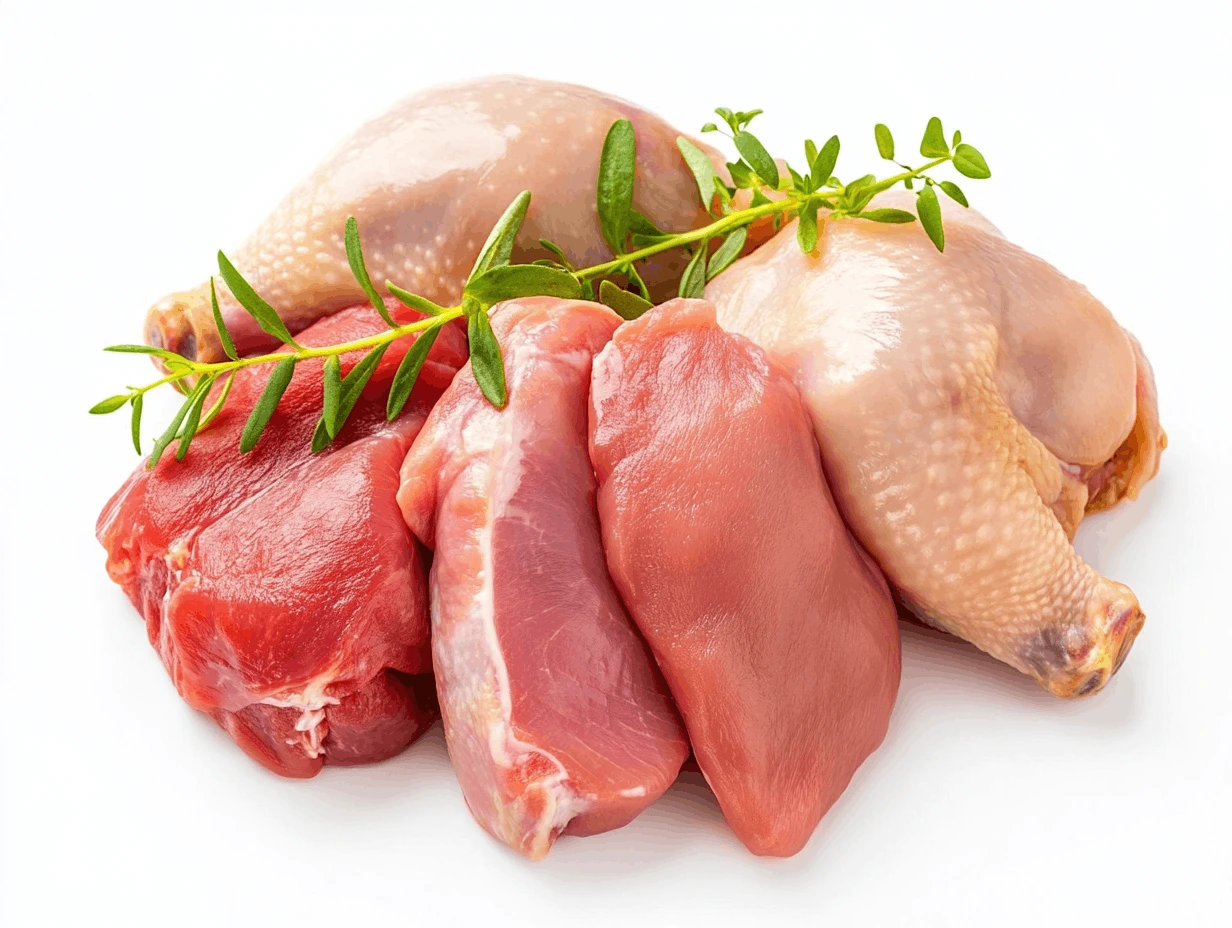
Chicken, turkey, duck, and more. Full nutritional data for every cut. Compare calories and protein across lean and fatty poultry options.
See calories for poultry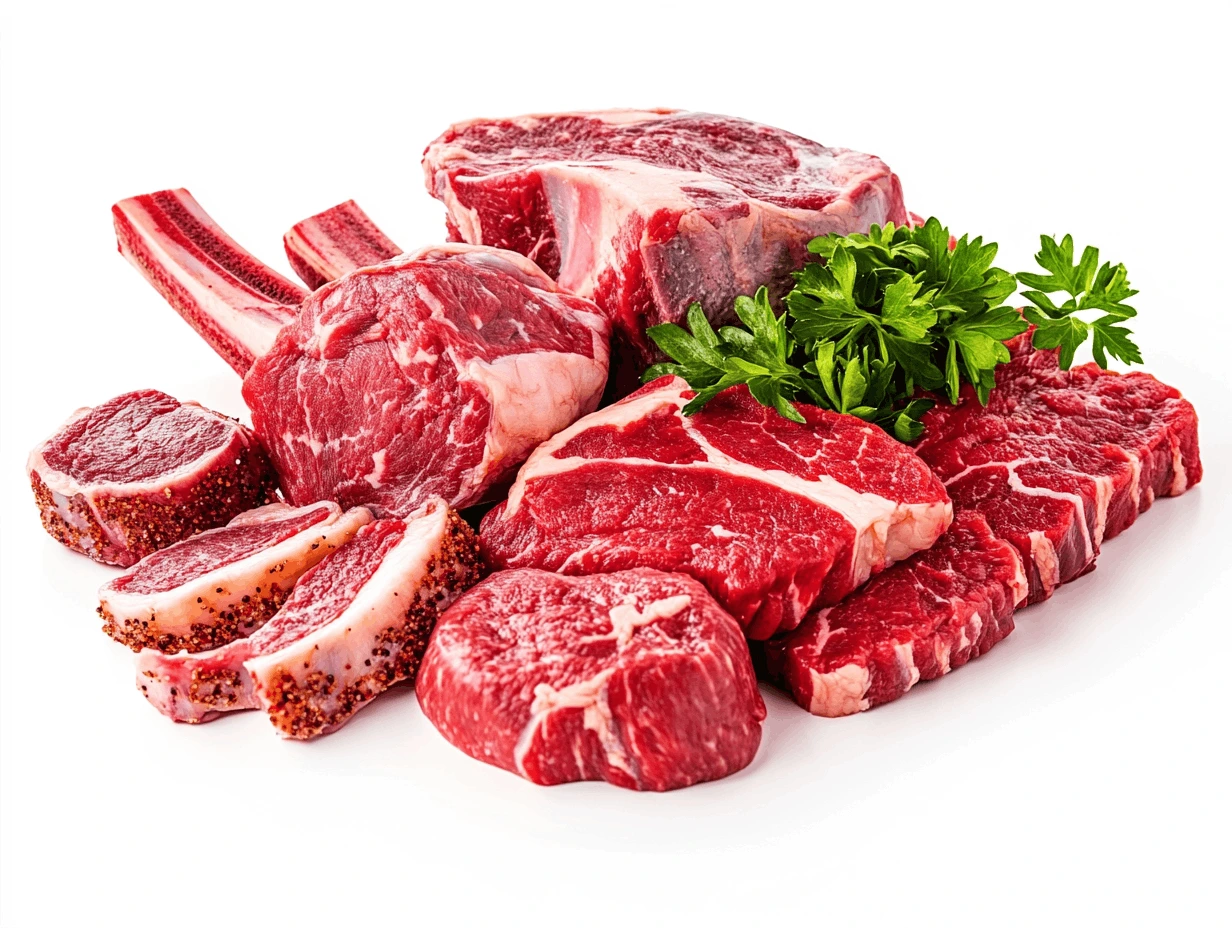
From ground beef to steak cuts, explore calories, protein, and fat across every variety. Compare lean vs. fatty cuts and track macros by raw or cooked weight.
See calories for beef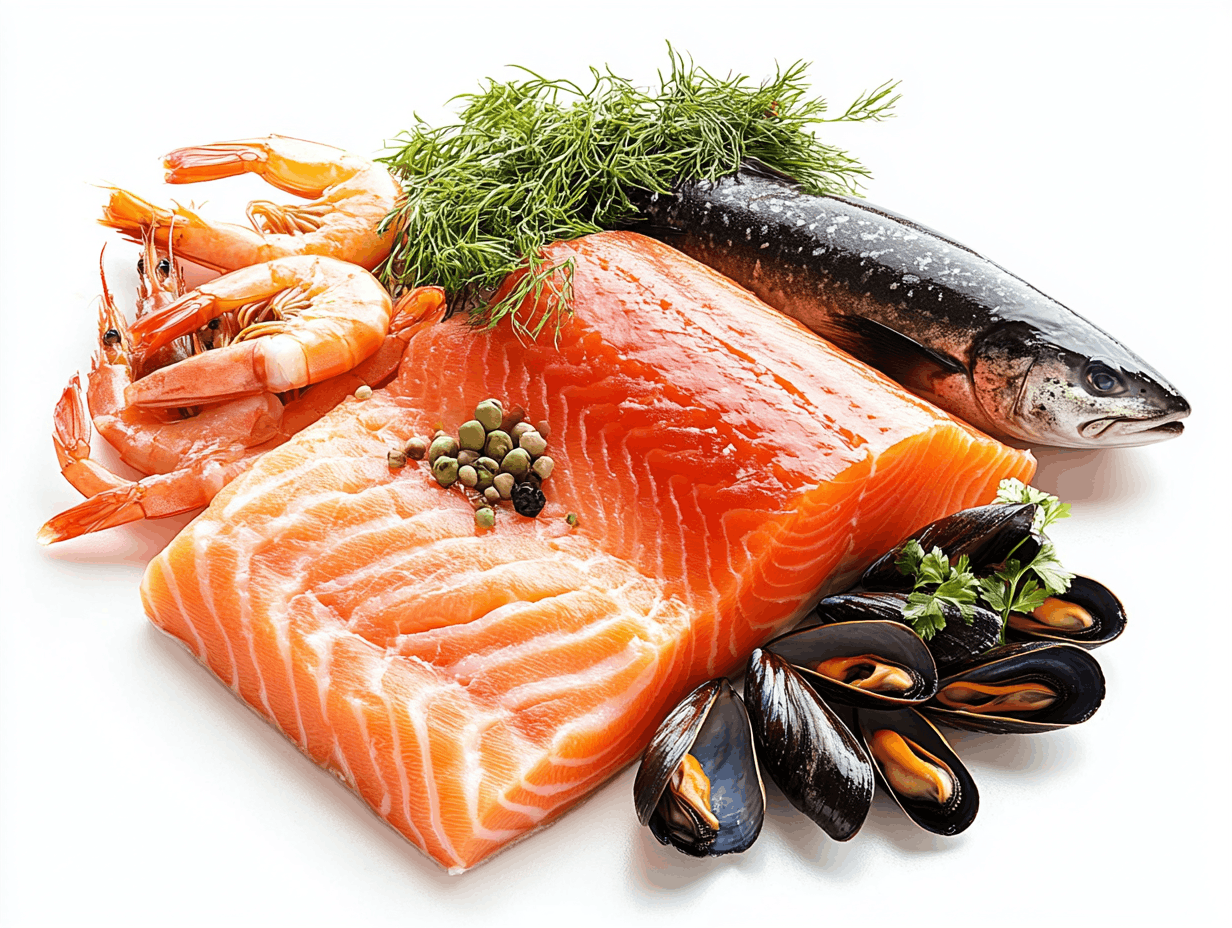
Rich in omega-3s and lean protein, fish and seafood are among the healthiest animal foods. Compare calories across salmon, tuna, shrimp, and more.
See calories for fish & seafood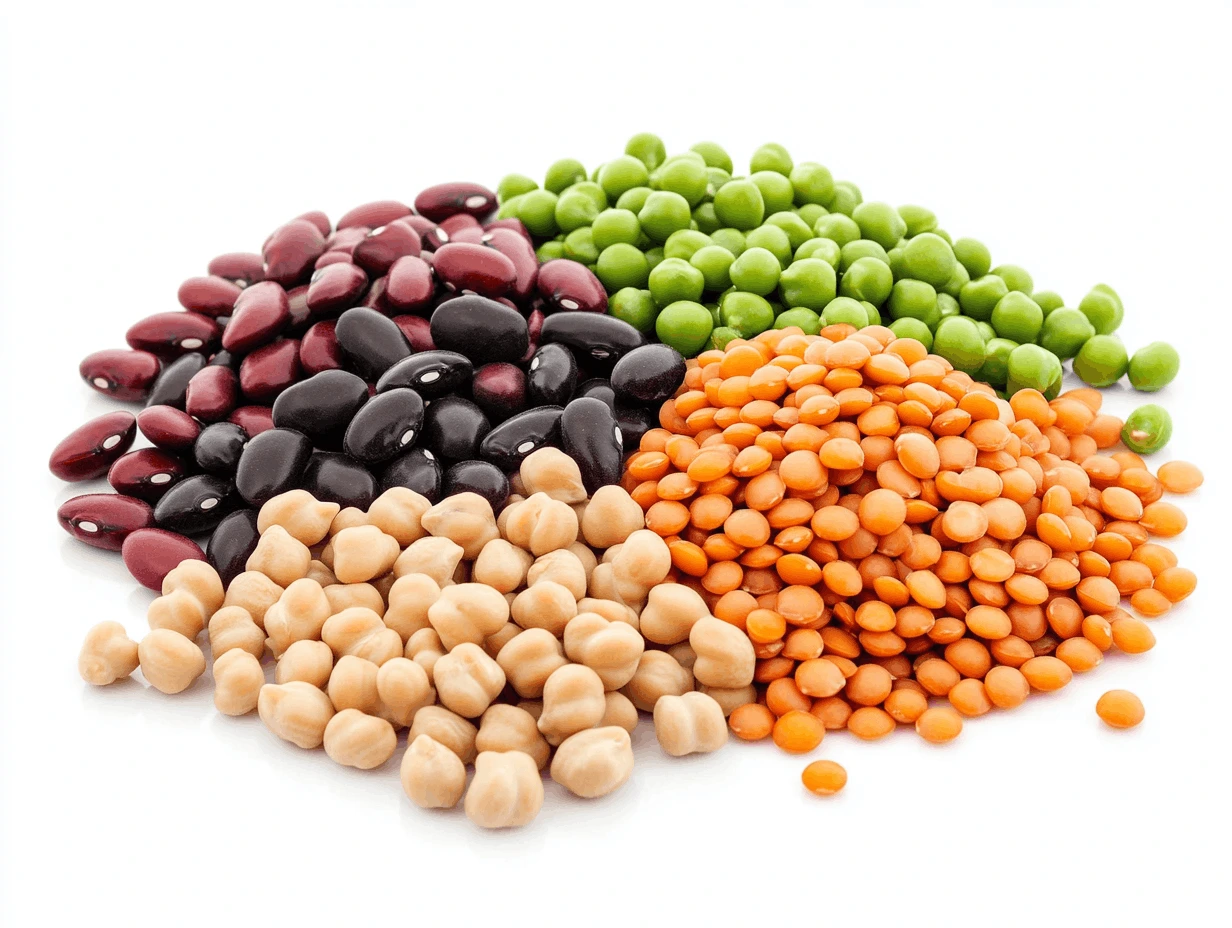
Beans, lentils, and chickpeas pack serious protein and fiber. Compare calories and macros across varieties to find the best plant-based protein sources.
See calories for legumes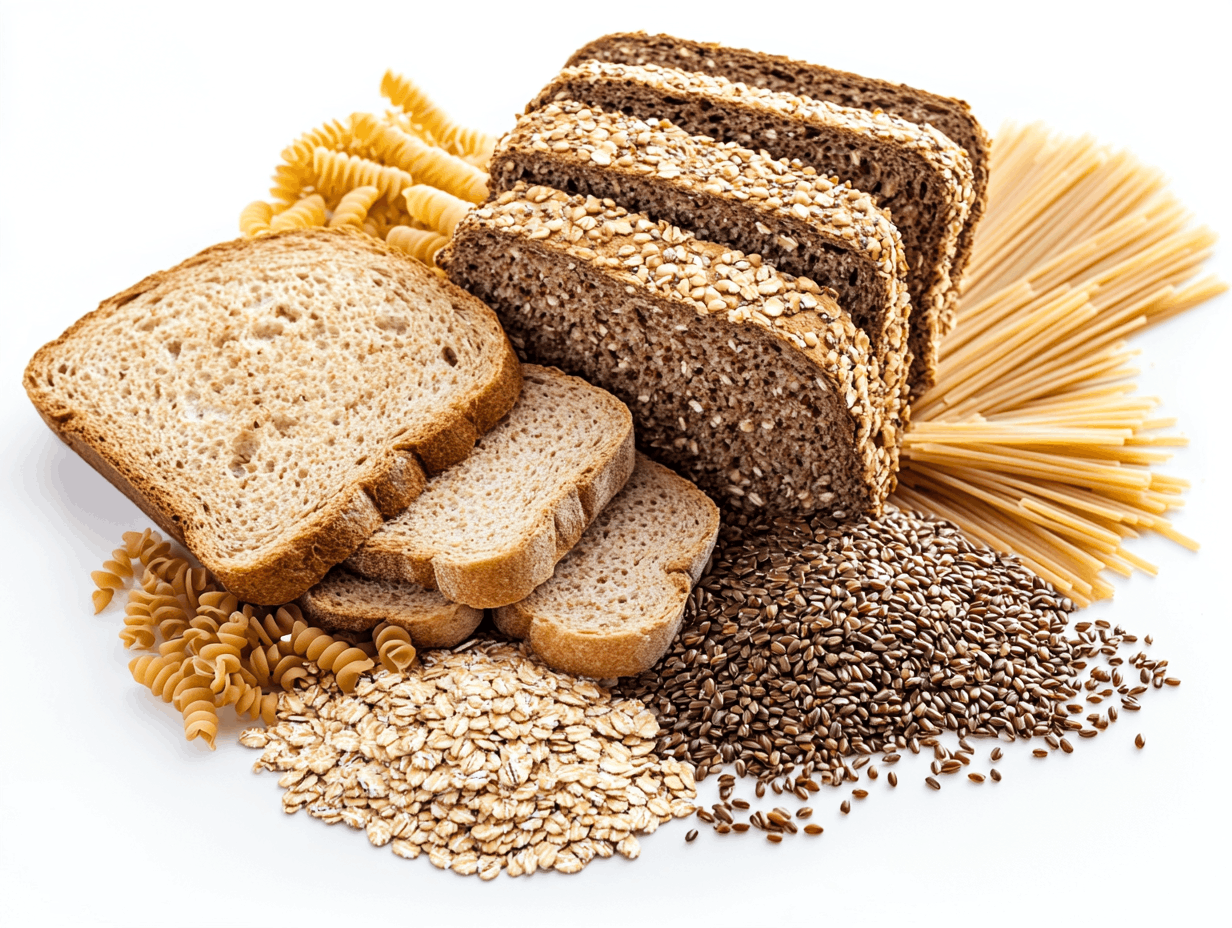
Rice, oats, pasta, and bread: grains are your main source of carbohydrates and energy. Browse by cooked or dry weight and track calories across common staples.
See calories for grains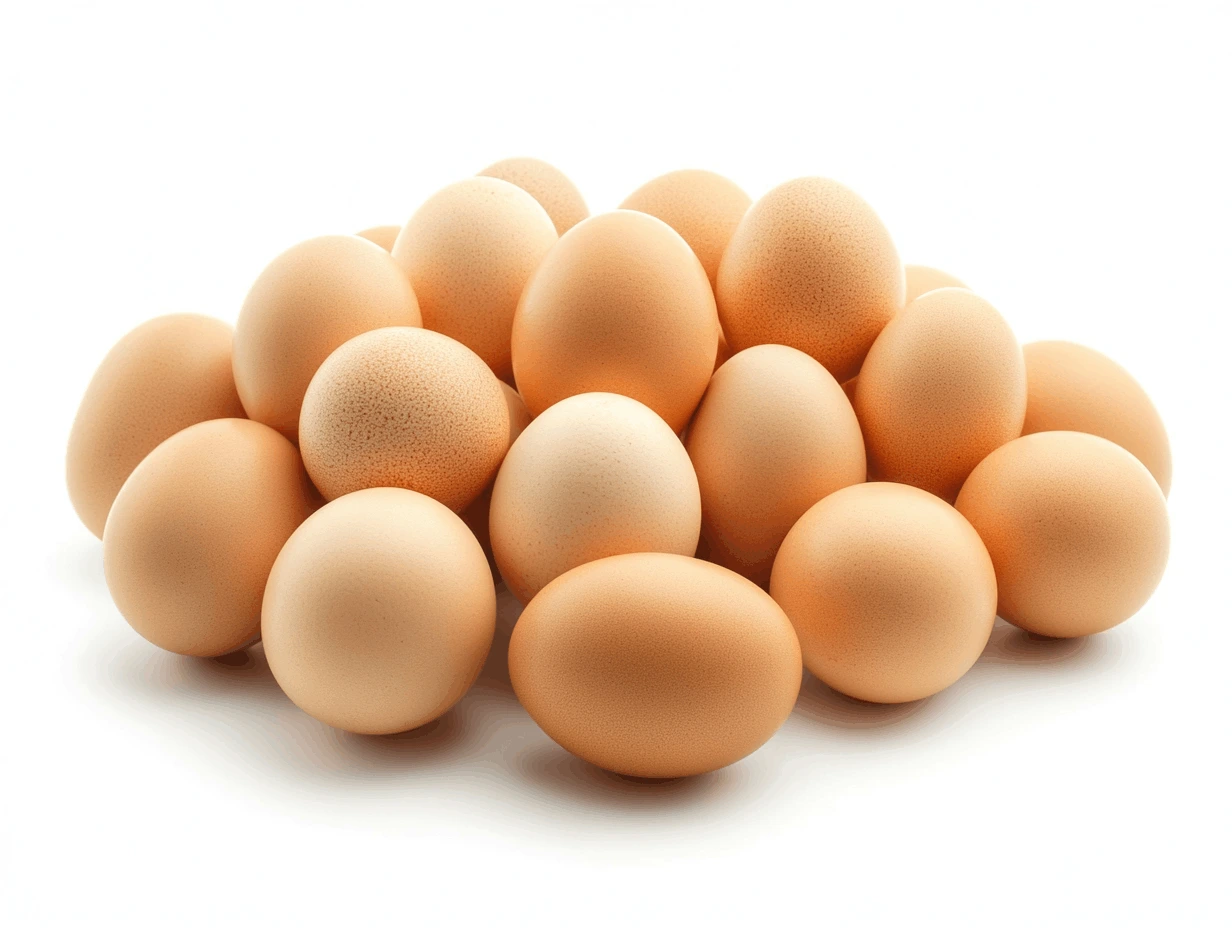
A complete protein source with essential amino acids, vitamins, and healthy fats. Track calories by whole egg, white, or yolk across different preparation methods.
See calories for eggs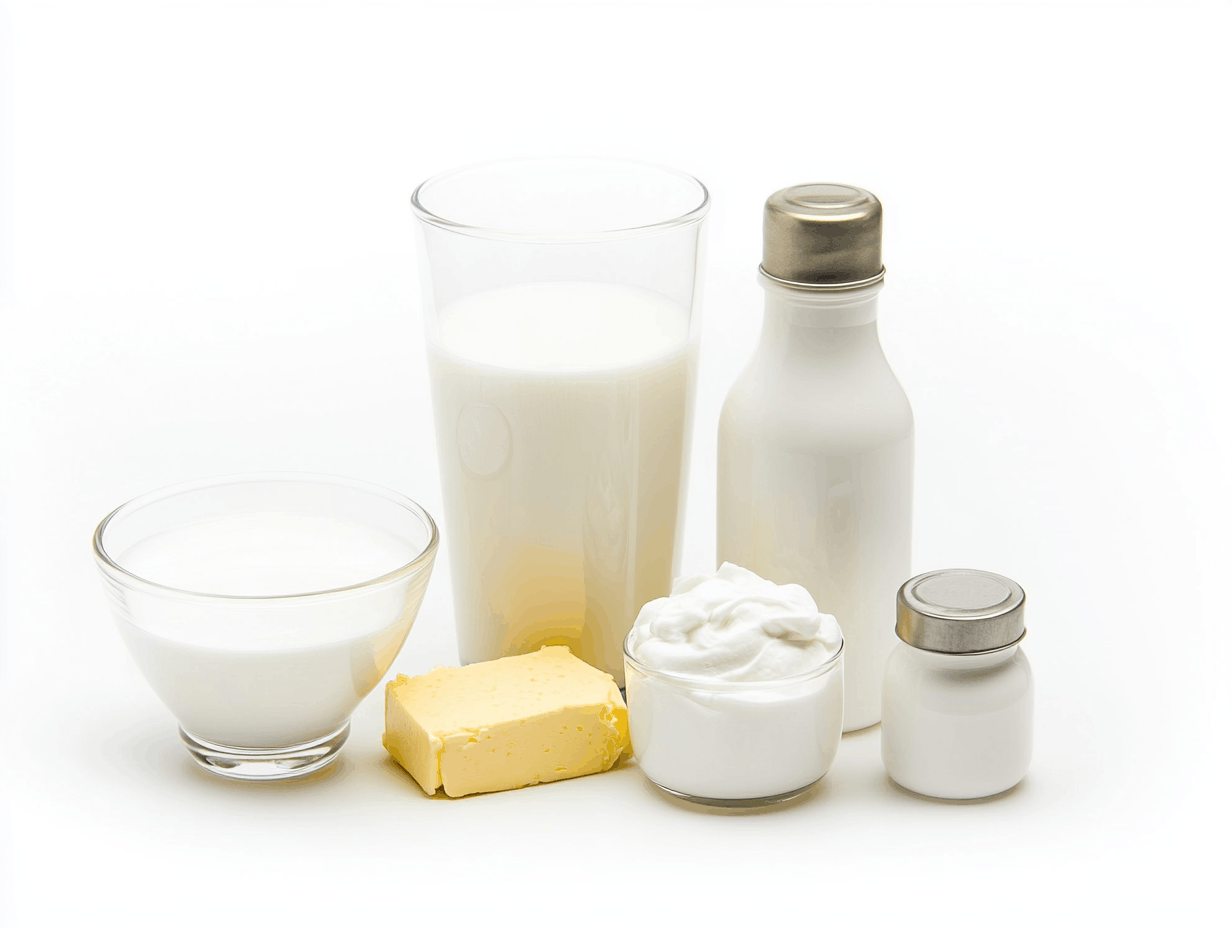
Milk, yogurt, and cream offer calcium and protein in every serving. Compare full-fat vs. low-fat options and track macros across your favourite dairy staples.
See calories for dairy products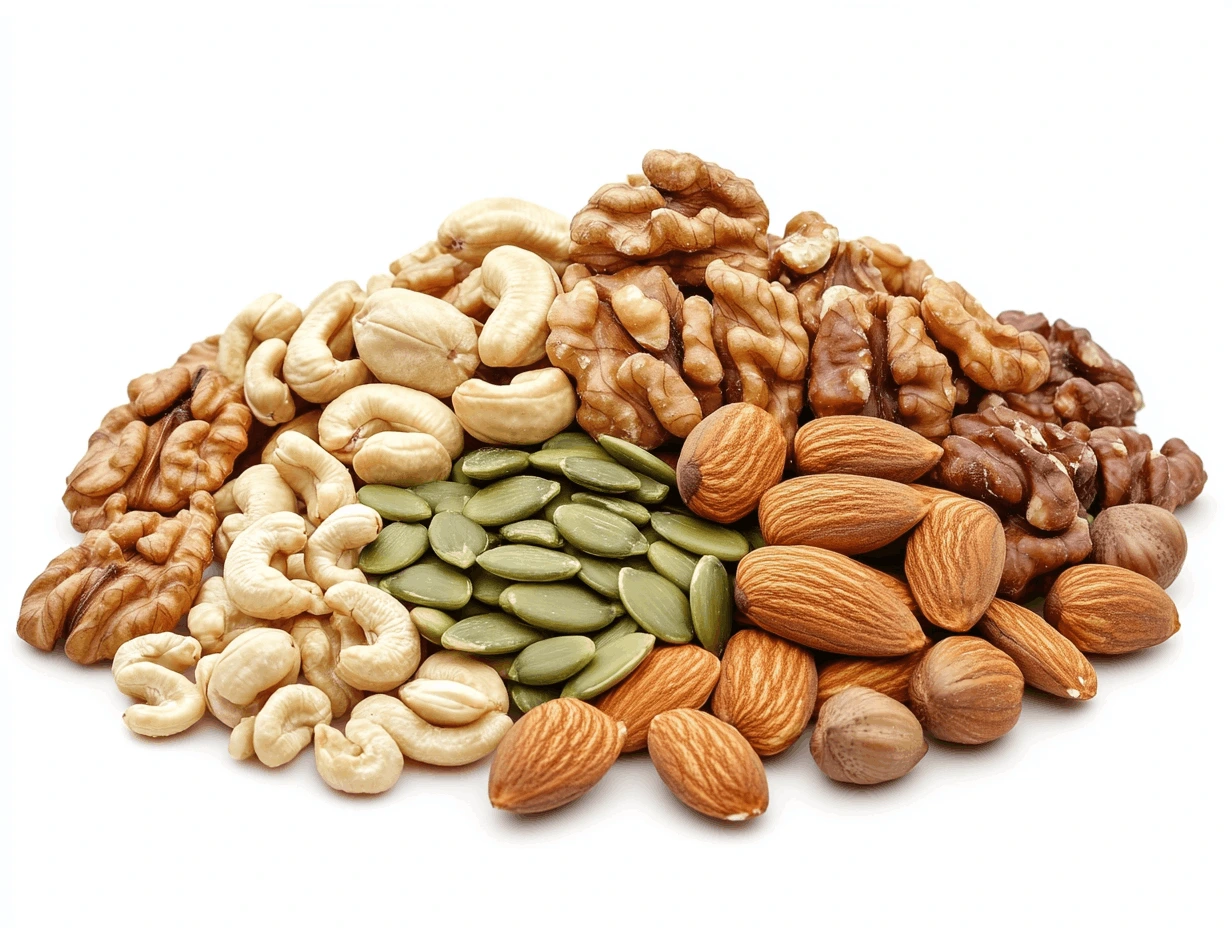
Calorie-dense and rich in healthy fats, nuts and seeds make every gram count. Compare protein, fat, and carb content across varieties to optimize snacking.
See calories for nuts & seeds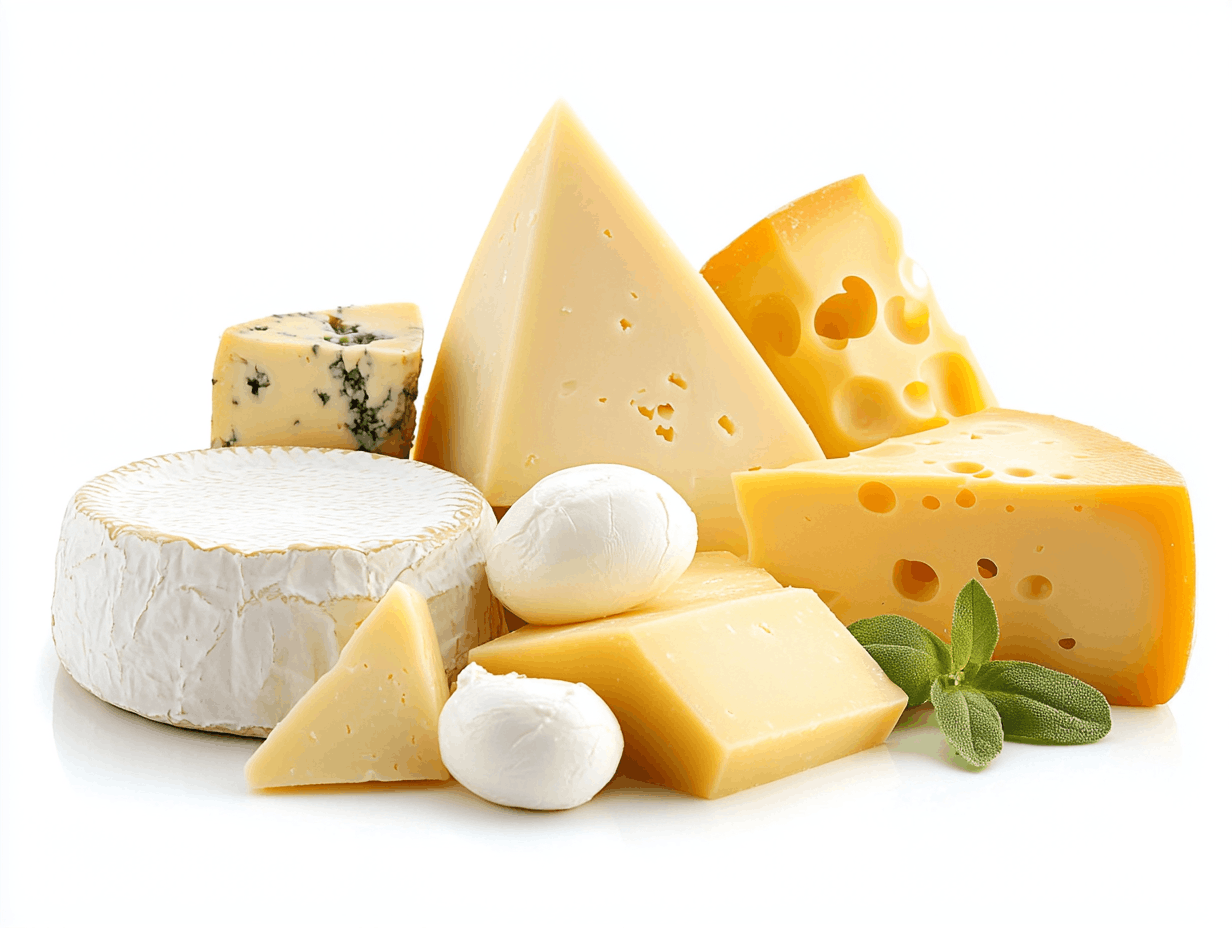
From fresh mozzarella to aged parmesan, cheese is rich in protein, fat, and calcium. Compare calories and macros across varieties and track portions by slice or gram.
See calories for cheese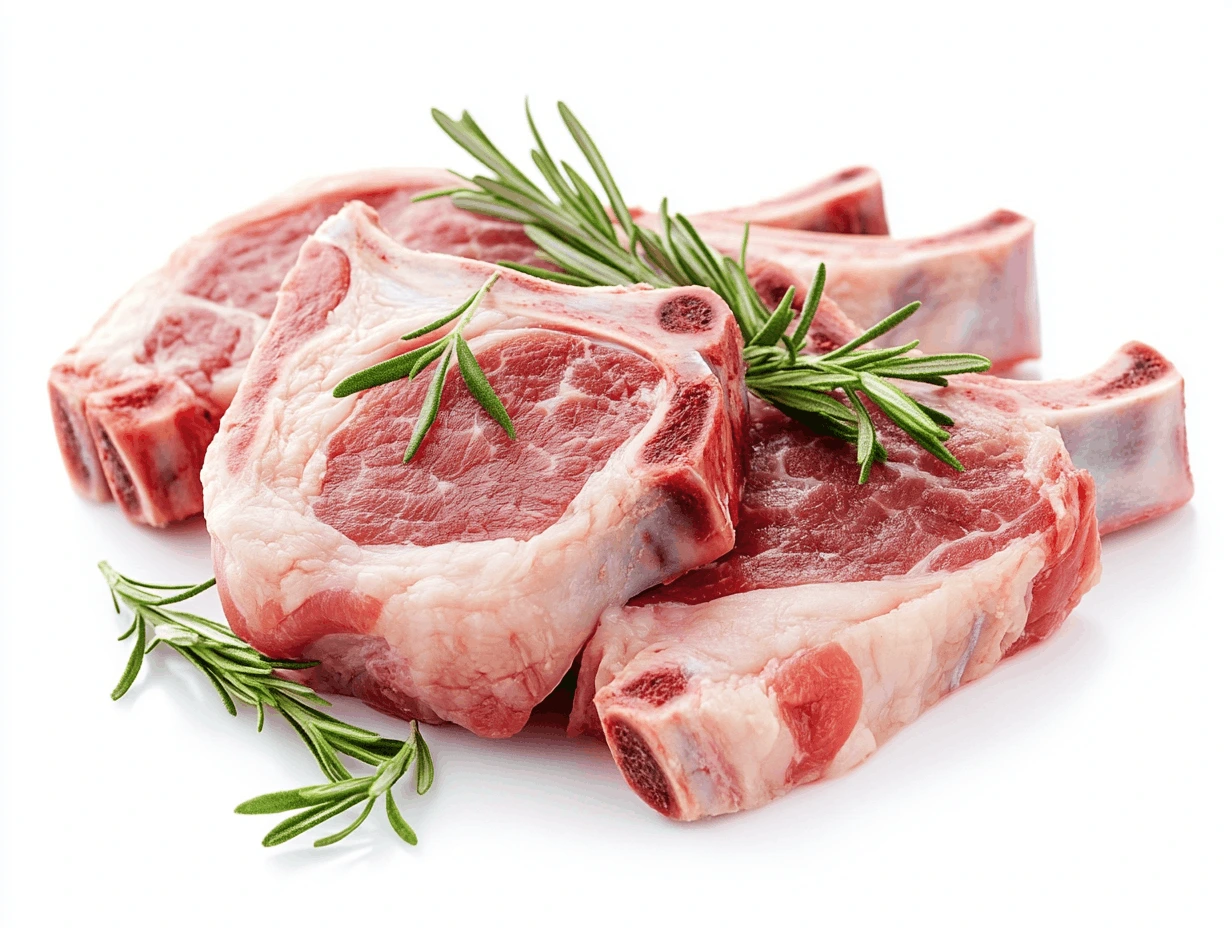
Pork offers versatile cuts from lean tenderloin to rich belly. Compare calories and macros across chops, ribs, and ground pork to make informed choices.
See calories for porkGet the numbers that actually matter for your health. From body composition to daily calorie targets, our calculators give you a clear, personalized starting point. No account needed.
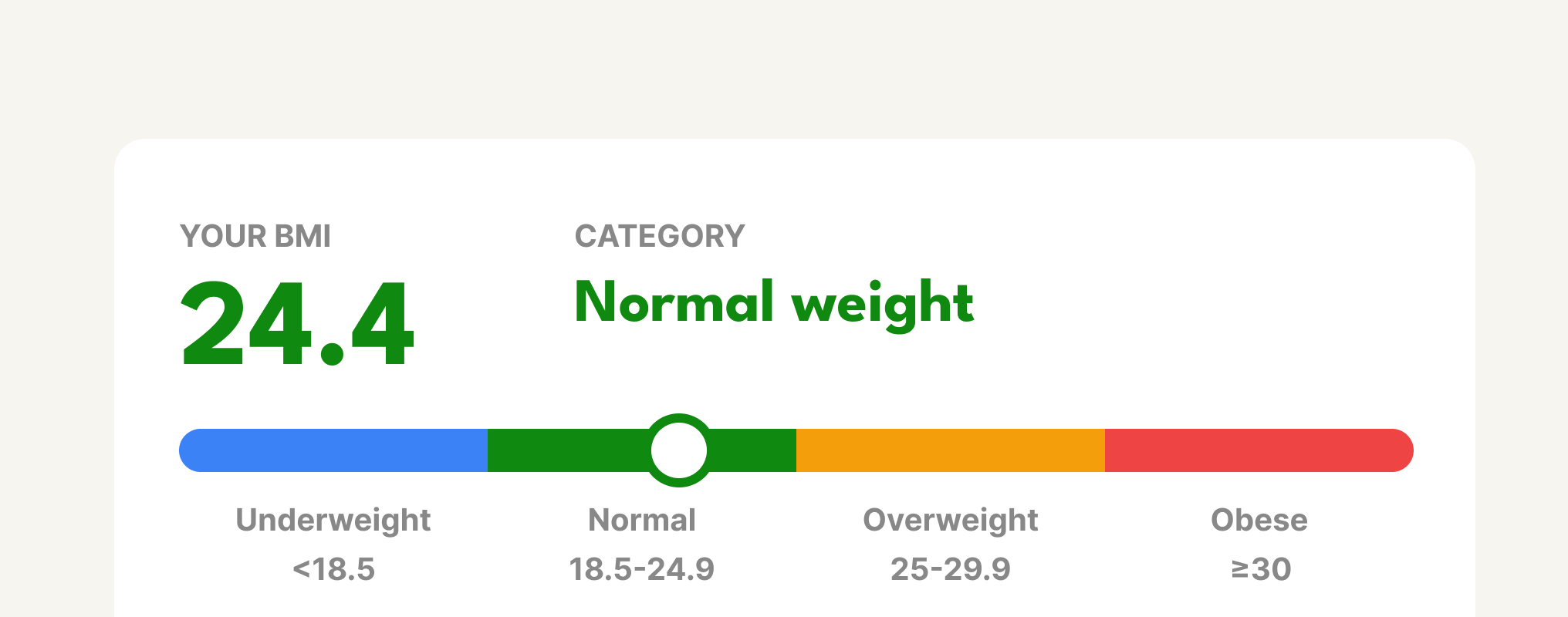
Find out if your weight is in a healthy range for your height. A quick first step to understanding your body and setting realistic health goals.
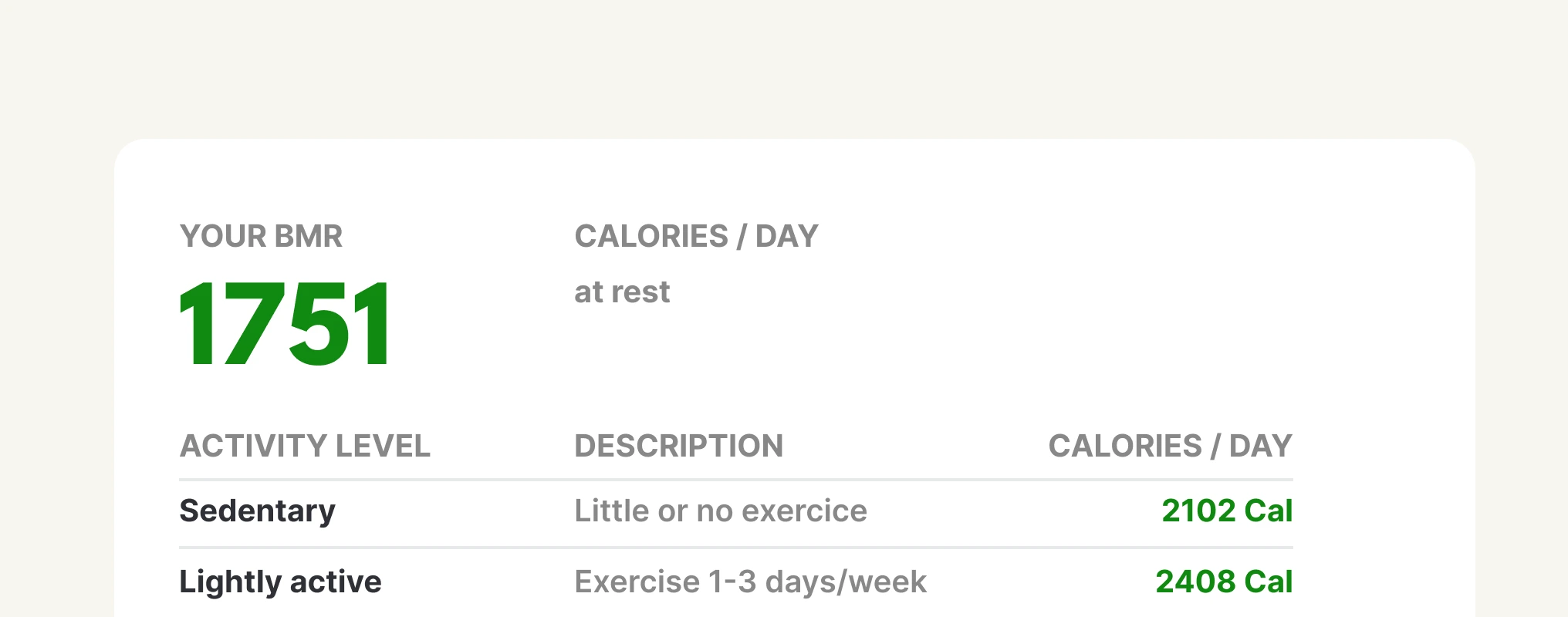
Discover how many calories your body burns at complete rest. Your BMR is the foundation of any smart nutrition or weight management plan.
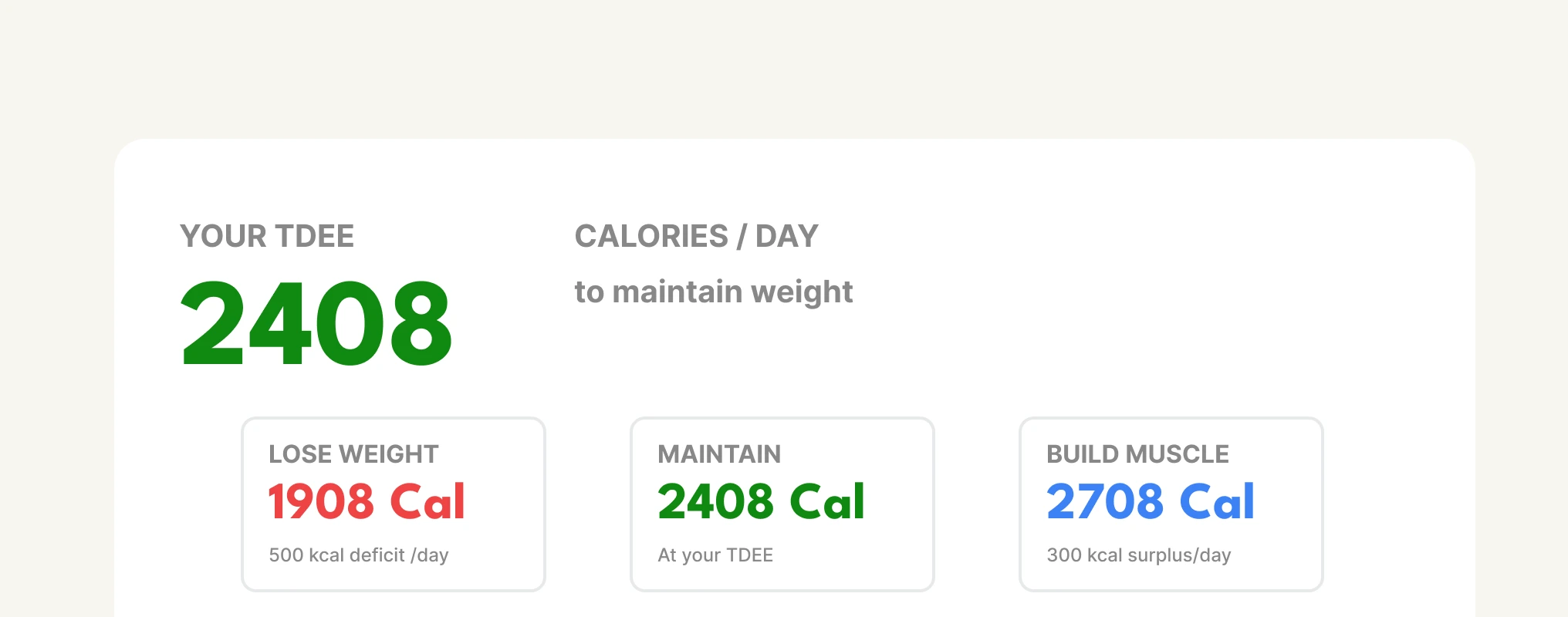
Get the exact number of calories your body needs based on your weight, height, age, and activity level.
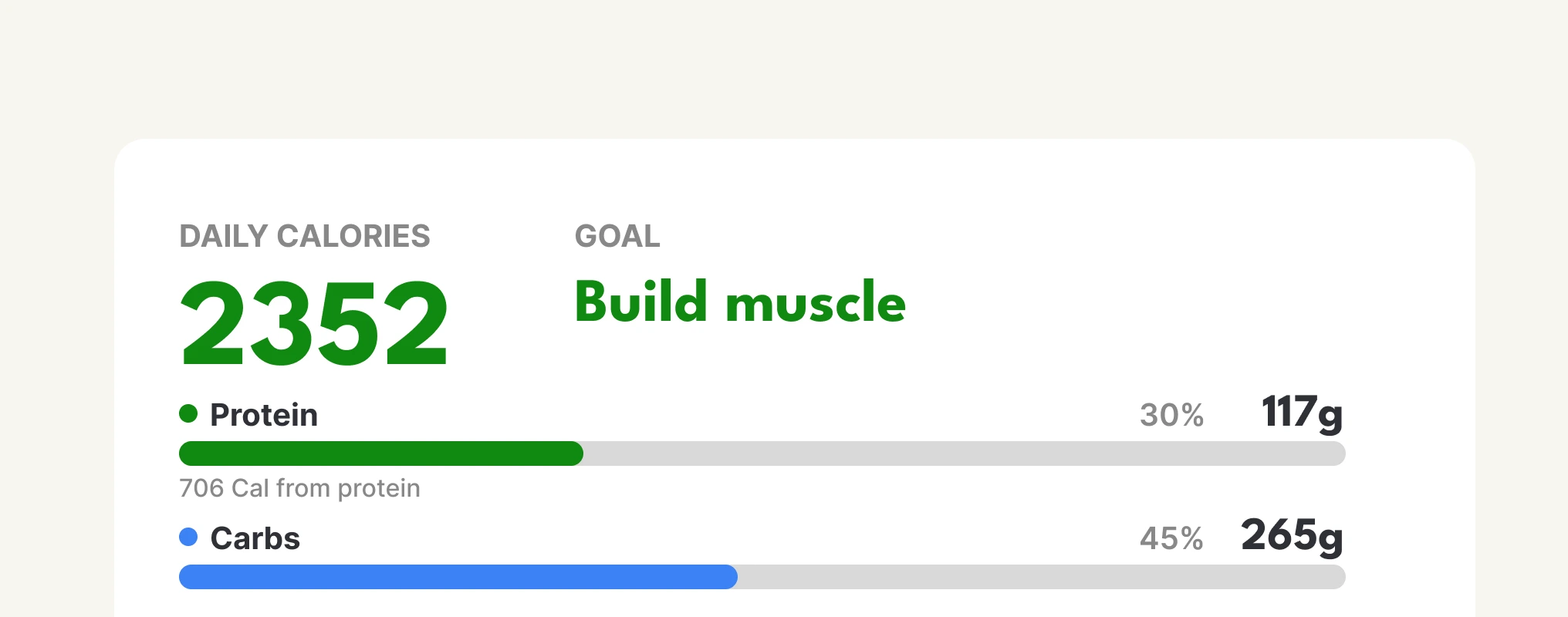
Find your ideal protein, carb, and fat targets based on your goals. Whether you're cutting, bulking, or maintaining, get a macro split tailored to you.
The lowest calorie fruits are those with the highest water content. Watermelon contains just 30 calories per 100g, strawberries 32 calories, cantaloupe 34 calories, and honeydew melon 36 calories. Peaches, grapefruit, and papaya are also very low at under 45 calories per 100g. These are ideal choices if you want to eat a large volume of fruit without consuming many calories.
A medium banana (about 118g) contains approximately 105 calories, with 27g of carbohydrates, 3g of fiber, and 1.3g of protein. Bananas provide a quick source of energy along with potassium, vitamin B6, and vitamin C. Riper bananas have slightly more sugar as starch converts during ripening, but the calorie count stays roughly the same.
Fruits contain natural sugars mainly fructose and glucose, but they are packaged alongside fiber, water, vitamins, and antioxidants. This makes them nutritionally very different from added sugars in processed foods. The fiber slows sugar absorption, reducing the glycaemic impact. Most fresh fruits have a moderate glycaemic index. Dried fruits, dates, and raisins are much more concentrated in sugar and calories, so portions matter more with those.
Yes, avocado is botanically a fruit, specifically a large berry with a single seed. It is nutritionally unique among fruits because it is very high in healthy monounsaturated fats, at around 14.7g of fat per 100g. This makes it calorie-dense at 160 calories per 100g compared to most fruits. Half an avocado provides about 160 calories, 6.7g of fiber, and significant amounts of potassium, folate, and vitamins K, C, and E.
A medium apple with skin (about 182g) contains approximately 95 calories, with 25g of carbohydrates and 4.4g of fiber. Apples are a good source of vitamin C and quercetin, an antioxidant linked to reduced inflammation. Eating an apple with the skin on provides more fiber than peeling it. The calorie content varies slightly by variety, with larger apples naturally containing more calories.
Passion fruit leads with around 10.4g of fiber per 100g. Raspberries and kumquats provide 6.5g per 100g, avocado 6.7g, and blackberries 5.3g. Guava and elderberries are also excellent fiber sources. Among more common fruits, pears contain 3.1g per 100g, apples 2.4g, and bananas 2.6g. Dried fruits are more concentrated in fiber per gram but also much higher in calories and sugar.
One cup of whole strawberries (about 152g) contains approximately 49 calories, with 11.7g of carbohydrates and 3g of fiber. Strawberries are exceptionally low in calories and one of the richest fruit sources of vitamin C, providing over 100% of the daily recommended intake per cup. They also contain manganese, folate, and antioxidants including anthocyanins and ellagic acid.
Dried fruits retain most of the nutrients of fresh fruit but lose their water content, concentrating both sugars and calories significantly. A single date contains around 66 calories, and 100g of raisins contains 299 calories compared to 69 calories in 100g of fresh grapes. In small portions, dried fruits provide fiber, iron, potassium, and antioxidants. The main risk is overconsumption, as it is easy to eat far more than a single serving without noticing.
One cup of sliced mango (about 165g) contains approximately 99 calories, with 25g of carbohydrates and 2.6g of fiber. Mangoes are rich in vitamin C, vitamin A, and folate, and contain digestive enzymes including amylases that help break down starch. They are one of the most nutrient-dense tropical fruits, though their natural sweetness means calories add up quickly when eating a whole large mango.
No, fruit juice is nutritionally quite different from whole fruit. Juicing removes most of the fiber, which is the component that slows sugar absorption and promotes fullness. A glass of orange juice can contain the sugar from 3 or 4 oranges with almost none of the fiber. Whole fruit is far more filling per calorie and has a lower glycaemic impact. Most nutrition guidance recommends eating whole fruit rather than drinking juice for these reasons.
One cup of grapes (about 151g) contains approximately 104 calories, with 27g of carbohydrates and 1.4g of fiber. Grapes are relatively high in natural sugar compared to berries, but they contain resveratrol, an antioxidant concentrated in the skin of red and purple grapes. Portion awareness matters more with grapes than with lower-sugar fruits like strawberries or raspberries, as it is easy to eat a large quantity quickly.
The best fruits for weight loss are those that are high in volume, fiber, and water while being low in calories. Top choices include strawberries, raspberries, blackberries, watermelon, peaches, and grapefruit, all under 50 calories per 100g. Berries in particular offer exceptional fiber content relative to their calorie count. Dried fruits, dates, and bananas should be eaten in smaller portions when managing weight.
A medium kiwifruit (about 76g) contains approximately 46 calories, with 11.2g of carbohydrates and 2.3g of fiber. Kiwis are exceptionally rich in vitamin C, with a single kiwi providing more than the daily recommended intake. They also contain vitamin K, folate, and actinidin, a digestive enzyme. Despite their small size, kiwis are among the most nutrient-dense fruits available.
Bananas are not fattening in themselves. A medium banana contains about 105 calories and virtually no fat. The concern around bananas usually comes from their higher carbohydrate and sugar content compared to berries or citrus. However, those carbohydrates come with fiber, resistant starch (especially in less ripe bananas), and potassium. Eaten as part of a balanced diet, bananas are a nutritious and practical food for most people, including those managing their weight.
One cup of pomegranate arils (about 174g) contains approximately 144 calories, with 32.6g of carbohydrates and 7g of fiber. Pomegranates are particularly high in antioxidants, especially punicalagins and anthocyanins, which have been studied for their effects on heart health and inflammation. The arils also provide meaningful amounts of folate and vitamin K.
Among fresh fruits, avocado is by far the highest in calories at 160 per 100g, due to its high fat content. Coconut meat is also very calorie-dense at around 354 calories per 100g. Among sweet, lower-fat fruits, plantains contain about 122 calories per 100g raw, followed by jackfruit at 95 calories per 100g and bananas at 89 calories. Dried fruits are the most calorie-dense of all: raisins contain 299 calories per 100g, dates 277 calories, and dried figs 249 calories.
One cup of raw blueberries (about 148g) contains approximately 84 calories, with 21.5g of carbohydrates and 3.6g of fiber. Blueberries are widely studied for their antioxidant content, particularly anthocyanins, which give them their deep blue colour and have been linked to improved cognitive function and reduced oxidative stress. They are also a good source of vitamin C, vitamin K, and manganese.
One cup of raw pineapple chunks (about 165g) contains approximately 83 calories, with 21.7g of carbohydrates and 2.3g of fiber. Pineapple contains bromelain, a group of enzymes with anti-inflammatory properties and potential benefits for digestion and muscle recovery. It is also an excellent source of vitamin C and manganese. Fresh pineapple is significantly lower in sugar than canned pineapple in syrup.
Citrus fruits including oranges, lemons, limes, grapefruit, and tangerines are among the most nutritious fruits available. They are exceptionally rich in vitamin C and contain flavonoids, folate, potassium, and soluble fiber in the form of pectin. Most citrus fruits are low in calories, with oranges at 47 calories per 100g and grapefruit at 42 calories. Grapefruit in particular has been studied for its potential role in blood sugar regulation, though it can interact with certain medications.
A standard wedge of watermelon (about 286g, roughly one-sixteenth of a whole watermelon) contains approximately 86 calories. Per 100g, watermelon is just 30 calories, making it one of the lowest calorie fruits available. It is around 92% water, which makes it highly filling per calorie. Watermelon is also a source of lycopene, vitamin C, and citrulline, an amino acid studied for its potential benefits in exercise recovery and blood pressure.